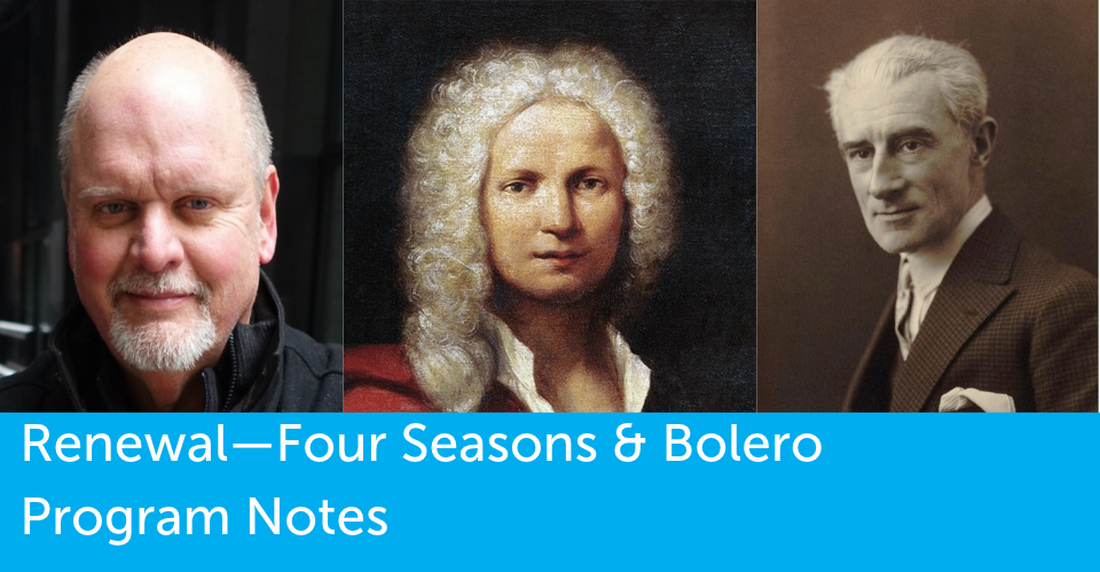
The history of the modern orchestral repertory begins around 1720 with Johann Sebastian Bach’s Brandenburg Concertos and The Four Seasons by Antonio Vivaldi, which was published in 1725 and enjoyed considerable popularity until the rational sensibilities of the later 18th century cast Baroque music into obscurity. Interest in The Four Seasons was renewed with the “Baroque Revival” beginning in the 1920s, when Vivaldi’s score appeared in modern editions and in concerts (it was introduced to the repertory of both the New York Philharmonic and Boston Symphony in 1928) and was first recorded in 1942. Today, The Four Seasons is not only one of the earliest pieces in the core orchestral repertory but also one of the most frequently performed.
Award-winning Iowa native Michael Daugherty is America’s most gifted composer at rendering facets of the country’s popular culture into the world of the symphony, as some of his titles attest: Sing Sing: J. Edgar Hoover; Desi (a tribute to Ricky Ricardo from I Love Lucy); Metropolis Symphony (inspired by Superman); Elvis Everywhere (for string quartet and three Elvis impersonators); Ghost Ranch (a tribute to paintings of Georgia O’Keeffe); Mount Rushmore for Chorus & Orchestra. Last Dance at the Surf is his tribute to the iconic Surf Ballroom in Clear Lake, Iowa.
“Boléro by Maurice Ravel I submit as the most insolent monstrosity ever perpetrated in the history of music,” fumed critic Edward Robinson in 1932. Ravel himself insisted, “I have written only one masterpiece. That is Boléro. Unfortunately, it contains no music.” When told that a woman at the Paris premiere had pointed in his direction and cried out, “He is mad,” Ravel smiled, and said that she truly understood the work. Despite, perhaps even because of such comments, Boléro became one of the most popular 20th-century orchestral pieces and spread the composer’s name around the world
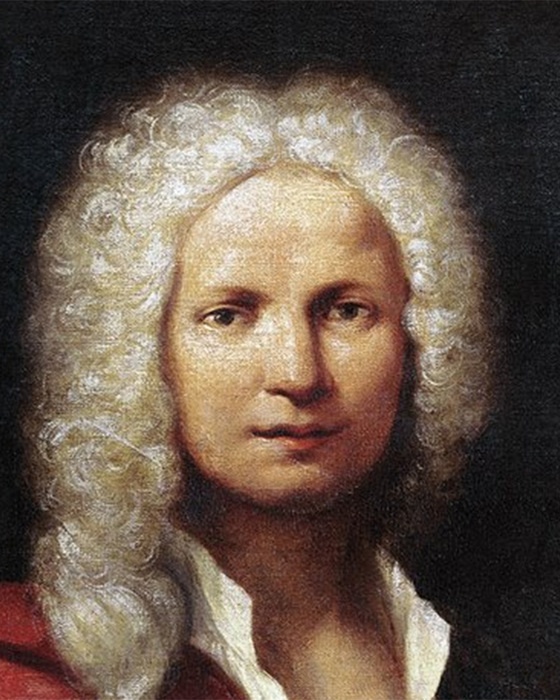
Antonio Vivaldi
Born March 4, 1678 in Venice;
died July 28, 1741 in Vienna.
The Four Seasons, Op. 8, Nos. 1-4
- First performances of each concerto likely occurred c. 1720 at Ospedale della Pietà, an all-girls convent, orphanage and music school where Vivaldi taught.
- First performed by the Des Moines Symphony on October 25 & 26, 2014 with Anne Akiko Meyers, violin and Joseph Giunta conducting.
(Duration: ca. 40 minutes)
The Gazette d’Amsterdam of December 14, 1725 announced the issuance by the local publisher Michele Carlo Le Cène of a collection of twelve concertos for solo violin and orchestra by Antonio Vivaldi — Il Cimento dell’Armonia e dell’Inventione, or “The Contest between Harmony and Invention,” Op. 8. The works were printed with a flowery dedication typical of the time to the Bohemian Count Wenzel von Morzin, a distant cousin of Haydn’s patron before he came into the employ of the Esterházy family in 1761. On the title page, Vivaldi described himself as the “maestro in Italy” to the Count, though there is no record of his having held a formal position with him. Vivaldi probably met Morzin when he worked in Mantua from 1718 to 1720 for the Habsburg governor of that city, Prince Philipp of Hessen-Darmstadt, and apparently provided the Bohemian Count with an occasional composition on demand. (A bassoon concerto, RV 496, is headed with Morzin’s name.) Vivaldi claimed that Morzin had been enjoying the concertos of the 1725 Op. 8 set “for some years,” implying earlier composition dates and a certain circulation of this music in manuscript copies, and hoped that their appearance in print would please his patron.
Though specifically programmatic (American critic Lawrence Gilman went so far as to call The Four Seasons “symphonic poems” and harbingers of Romanticism), the fast, outer movements of these works use the ritornello form usually found in Baroque concertos. The opening ritornello theme (Italian for “return”), depicting the general emotional mood of each fast movement, recurs to separate its various descriptive episodes, so that the music fulfills both the demands of creating a logical, abstract form and evoking vivid images from Nature. The slow middle movements are lyrical, almost aria-like, in style. Though Vivaldi frequently utilized in these pieces the standard concertino, or solo group, of two violins and cello found in the 18th-century concerto grosso, The Four Seasons is truly a work for solo violin and orchestra, and much of the music’s charm comes from the contrasting and interweaving of soloist and orchestra. Of these evergreen concertos, Marc Pincherle, in his classic biography of Vivaldi, wrote, “Their breadth, their clearness of conception, the obvious pleasure with which the composer wrought them, the favorable reception that has been theirs from the first, their reverberations since then — all these unite to make them one of the masterpieces of the descriptive repertory.”
The first four concertos of Op. 8, those depicting the seasons of the year, seem to have especially excited Morzin’s admiration, so Vivaldi made specific the programmatic implications of the works by heading each of them with a sonnet:
Spring
The spring has come, joyfully,
The birds welcome it with merry song,
And the streams flow forth with sweet murmurs.
Now the sky is draped in black,
Thunder and lightning announce a storm.
When the storm has passed, the little birds
Return to their harmonious songs.
And in the lovely meadow full of flowers,
To the gentle rustling of leaves and branches,
The goatherd sleeps, his faithful dog at his side.
To the rustic bagpipe’s merry sound,
Nymphs and shepherds dance under the lovely sky
When spring appears in all its brilliance.
Summer
In the heat of the blazing summer sun,
Man and beast languish; the pine tree is scorched.
The cuckoo raises his voice.
Soon the turtledove and goldfinch join in the song.
A gentle breeze blows,
But then the north wind whips,
And the shepherd weeps
As above him the dreaded storm gathers.
His weary limbs are roused from rest
By his fear of the lightning and fierce thunder
And by the angry swarms of flies and hornets.
Alas, his fears are borne out.
Thunder and lightning dominate the sky,
Bending down the tops of trees and flattening the grain.
Autumn
The peasant celebrates with dance and song
The joy of a fine harvest;
And filled with Bacchus’ liquor
He ends his fun in sleep.
Everyone is made to leave dancing and singing.
The air is gentle and pleasing,
And the season invites everyone
To enjoy a delightful sleep.
At dawn the hunters set out
With horns, guns and dogs.
The hunted animal flees,
Terrified and exhausted by the noise
Of guns and dogs.
Wounded, it tries feebly to escape,
But is caught and dies.
Winter
Freezing and shivering in the icy darkness,
In the severe gusts of a terrible wind,
Running and stamping one’s feet constantly,
So chilled that one’s teeth chatter.
Spending quiet and happy days by the fire
While outside the rain pours everywhere.
Walking on the ice with slow steps,
Walking carefully for fear of falling,
Then stepping out boldly, and falling down.
Going out once again onto the ice, and running boldly
Until the ice cracks and breaks,
Hearing the Scirocco,
The North Wind, and all the winds battling.
This is winter, but such joy it brings.
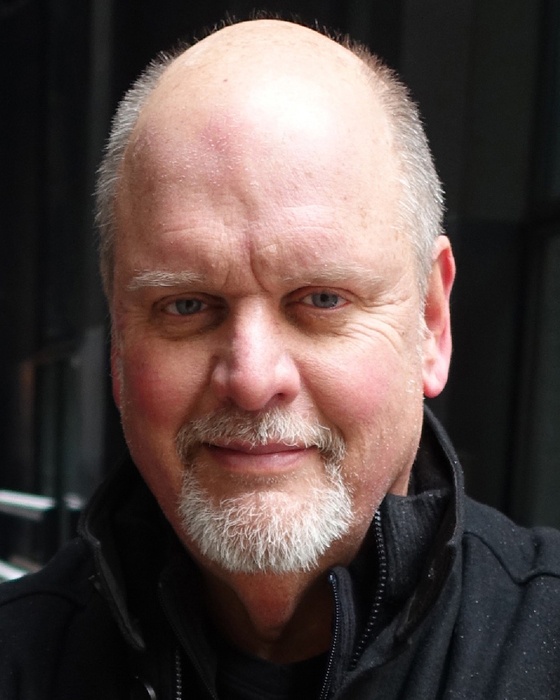
Michael Daugherty
Born April 28, 1954 in Cedar Rapids, Iowa.
Last Dance at the Surf
- First performed on November 20, 2021 at the All-State Music Festival in Ames, Iowa by the Iowa All-State Orchestra, conducted by Rebecca Burkhardt.
- These concerts mark the first performances of this piece by the Des Moines Symphony.
(Duration: ca. 16 minutes)
Multiple GRAMMY® Award-winning composer Michael Daugherty is one of the most-commissioned, performed and recorded composers on today’s international concert music scene. His music is rich with cultural allusions and bears the stamp of classic modernism, with colliding tonalities and blocks of sound; at the same time, his melodies can be eloquent and stirring. Known for his ear, his wit, and his imagination of how instruments work together, Daugherty’s music is inspired by American idioms, mythologies, and icons. His music, recorded by Naxos over the last two decades, has received six GRAMMY® Awards, including “Best Contemporary Classical Composition” in 2011 for Deus ex Machina for piano and orchestra and Tales of Hemingway for cello and orchestra in 2017.
Born in 1954 in Cedar Rapids, Iowa, Daugherty is the son of a dance band drummer and the oldest of five brothers, all professional musicians. As a young man, Daugherty studied composition with many of the preeminent composers of the 20th century, including Jacob Druckman, Earle Brown, Bernard Rands, and Roger Reynolds at Yale (1980-82), Pierre Boulez at IRCAM in Paris, Betsy Jolas at the Paris Conservatory (1979), and György Ligeti in Hamburg (1982-84). Daugherty was also an assistant to jazz arranger Gil Evans in New York (1980-82).
Since 1991, Daugherty has been Professor of Composition at the University of Michigan School of Music, Theatre & Dance, in Ann Arbor, Michigan, where he is a mentor to many of today’s most talented young composers. He is also a frequent guest of professional orchestras, festivals, universities, and conservatories around the world.
Recent recordings of Daugherty’s music include his harp concerto Harp of Ages performed by the Colorado Symphony, with Courtney Hershey Bress, solo harp, his violin concerto inspired by Amelia Earhart, Blue Electra, performed by the Albany Symphony with Anne Akiko Meyers, solo violin and Fifteen: Symphonic Fantasy on the Art of Andy Warhol and Gold for orchestra performed by the Pittsburgh Symphony to be released in the near future.
The composer wrote of Last Dance at the Surf, commissioned for the 75th Iowa All-State Music Festival in Ames, Iowa in 2021, “One of my favorite road trips in Iowa is a drive to the majestic Surf Ballroom, located in the small resort town of Clear Lake, around 140 miles northwest of Cedar Rapids, my boyhood hometown. Opening in 1934, many of America’s most famous swing, jazz and rock ‘n’ roll bands have performed at ‘The Surf’ for generations of music lovers, dancing the night away on the immense hardwood floor.
“The Surf is also remembered as the place where young rock ‘n’ roll stars Buddy Holly, Ritchie Valens and The Big Bopper gave their last performances of the Winter Dance Party tour on the evening of February 2, 1959. They died hours later in a charter plane crash caused by severe winter weather. This tragedy is often referred to as ‘the day the music died.’ But did it really?
“In memory of the three rock ‘n’ roll legends who perished in February 1959, and in celebration of the Surf Ballroom being declared a National Historic Landmark in January 2021, I composed a one-movement dance symphony titled Last Dance at the Surf.
“My dance symphony starts with woodblocks and pizzicato strings, playing a five-note rhythmic groove reminiscent of a Buddy Holly guitar riff. This groove is repeated in various transformations throughout the composition and provides counterpoint to the main theme, a syncopated ascending melody played in unison by the woodwinds. The main theme goes through elaborate rhythmic and timbral developments, followed by a rousing ‘rockabilly’ section.
“A second lyrical theme is introduced as a slow dance, with cantabile muted trumpets, woodwinds and violins swooning over hushed lower strings and trombones. The opening theme abruptly returns in a high-energy fugue ‘goin’ faster than a roller coaster’ and then dramatically transforms into a majestic chorale in slow motion. A solo horn cadenza transitions into a final slow dance, kaleidoscopically unraveling the main theme through elaborate counterpoint, punctuated by the sound of sleigh bells.
“The first coda is a recapitulation of all the previous themes, unfolding with great fanfare but interrupted by foreboding minor chords, a premonition that destiny is just around the corner. A slow, wistful second coda announces that the last dance has begun. Three final chords resonate: although the dance is over, the music and memories of the Surf Ballroom live on.”
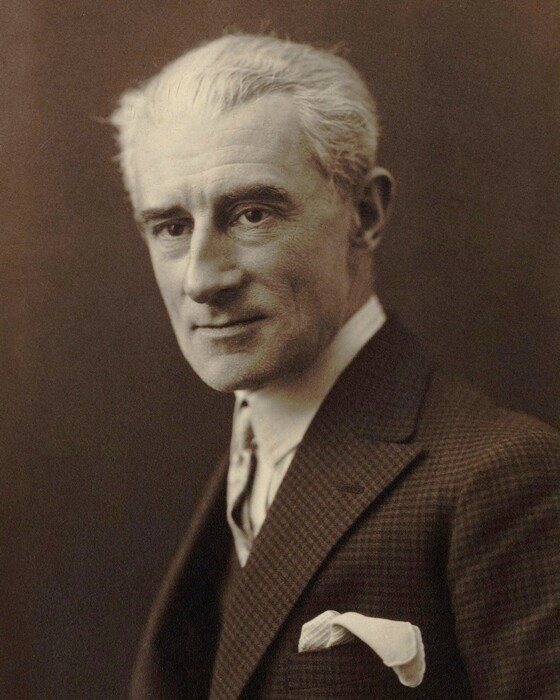
Maurice Ravel
Born March 7, 1875 in Ciboure, France;
died December 28, 1937 in Paris.
Boléro
- First performed on November 20, 1928 at the Paris Opéra, conducted by Walter Straram.
- First performed by the Des Moines Symphony on April 10 & 11, 1976 with Yuri Krasnapolsky conducting. Six subsequent performances occurred, most recently on May 13 & 14, 2017 conducted by Joseph Giunta.
(Duration: ca. 17 minutes)
Ravel originated what he once called his “danse lascive” at the suggestion of Ida Rubinstein, the famed ballerina who also inspired works from Debussy, Honegger and Stravinsky. Rubinstein’s balletic interpretation of Boléro, set in a rustic Spanish tavern, portrayed a voluptuous dancer whose stomps and whirls atop a table incite the men in the bar to mounting fervor. With growing intensity, they join in her dance until, in a brilliant coup de théâtre, knives are drawn and violence flares on stage at the moment near the end where the music modulates, breathtakingly, from the key of C to the key of E. So viscerally stirring was the combination of the powerful music and the ballerina’s suggestive dancing at the premiere that a near-riot ensued between audience and performers, and Miss Rubinstein narrowly escaped injury. The usually reserved Pitts Sanborn reported that the American premiere, conducted by Arturo Toscanini at Carnegie Hall on November 14, 1929, had a similar effect on its hearers: “If it had been the custom to repeat a number at a symphonic concert, Boléro would surely have been encored, even at the risk of mass wreckage of the nerves.”
Of the musical nature of this magnificent study in hypnotic rhythm and orchestral sonority, Ravel wrote in 1931 to the critic M.D. Calvocoressi, “I am particularly desirous that there should be no misunderstanding about this work. It constitutes an experiment in a very special and limited direction and should not be suspected of aiming at achieving anything different from or anything more than it actually does achieve. Before its first performance, I issued a warning to the effect that what I had written was a piece lasting about seventeen minutes and consisting wholly of ‘orchestral tissue without music’ — of one long, very gradual crescendo. There are no contrasts, there is practically no invention except the plan and the manner of execution. The themes are altogether impersonal ... folktunes of the usual Spanish-Arabian kind, and (whatever may have been said to the contrary) the orchestral writing is simple and straightforward throughout, without the slightest attempt at virtuosity.... I have carried out exactly what I intended, and it is for listeners to take it or leave it.” Listeners have.