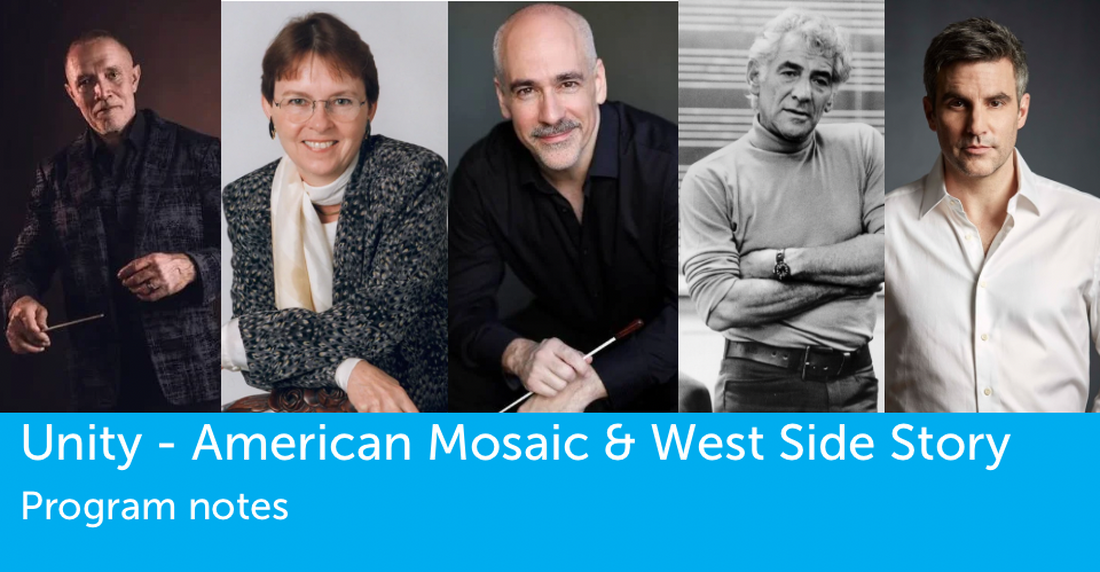
30 SECOND NOTES: This concert celebrates both the American Heartland and the American City as well as their common heritage in an inspiring multi-media work co-commissioned by the Des Moines Symphony — American Mosaic, with music by award-winning composer Peter Boyer and stunning images by celebrated videographer Joe Sohm. The program opens with another Des Moines Symphony commission, Heartland by Saint Louis native and Pulitzer Prize-winner Kevin Puts, and is followed by the buoyant In Good King Charles’s Golden Days, which Des Moines native Linda Robbins Coleman based on her incidental music for a 1989 production of George Bernard Shaw’s historical comedy. The Harlem Quartet joins the orchestra for Urban Legends by Oscar-nominee and Pulitzer Prize-winner Michael Abels and the iconic West Side Story Concerto, based on the Broadway masterpiece by Leonard Bernstein.
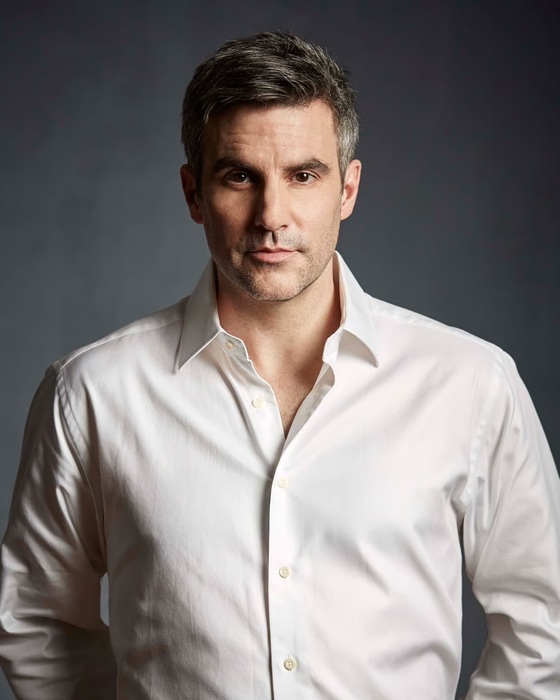
KEVIN PUTS
Born January 3, 1972 in St. Louis, Missouri.
HEARTLAND
Des Moines Symphony Commission
- First performed by the Des Moines Symphony on September 24 & 25, 2022 with Joseph Giunta conducting.
(Duration: ca. 5 minutes)
Kevin Puts, born in 1972 in St. Louis, received his Bachelor’s Degree from the Eastman School of Music, his Master’s from Yale, and his Doctorate from Eastman; he also participated in the 1996 Tanglewood Festival Fellowship Program. He taught at the University of Texas at Austin from 1999 until 2006, when he joined the faculty of the Peabody Institute in Baltimore. Puts has accumulated an impressive array of distinctions: the Pulitzer Prize for his opera Silent Night, based on the 2005 French film Joyeux Noël, premiered by Minnesota Opera in November 2012, and receiving its Metropolitan Opera debut in March 2027; from 1996 to 1999, he served concurrently as Composer-in-Residence with the California Symphony and Young Concert Artists, Inc. in New York; and he has received commissions, grants and awards from noted ensembles and organizations across the country. Puts’ most recent opera is The Hours, which was first performed in concert in Philadelphia in March 2022 and had its stage premiere in November 2022 at the Metropolitan Opera, where it played to packed houses. The Hours was telecast internationally as part of the Met’s Live in HD series and revived the following season, the first instance in the company’s history of a work returning the year after its premiere.
Kevin Puts wrote of Heartland, “As I was born in St. Louis, Missouri and grew up both there and in central Michigan, Joseph Giunta thought of commissioning me for the Des Moines Symphony’s ‘Music from the Heartland’ project. The result is a ‘sequel’ to Millennium Canons, which I wrote for the Boston Pops in 2001. In both works, I adopt the ages-old practice of contrapuntal imitation to create active textures that dance along the top of broad, hymn-like melodies. I live on the East Coast now, but the Midwest is still in my blood and very much a part of who I am. I believe this is reflected quite unmistakably in both the harmonic flavor of Heartland and in its expansive phraseology.”
The score calls for two piccolos, three flutes, two oboes, English horn, E-flat clarinet, two clarinets, two bassoons, contrabassoon, four horns, three trumpets, three trombones, tuba, timpani, bass drum, cymbals, glockenspiel, vibraphone, chimes, crotales, tam-tam, piano, harp and the usual strings consisting of first violins, second violins, violas, violoncellos and double basses.
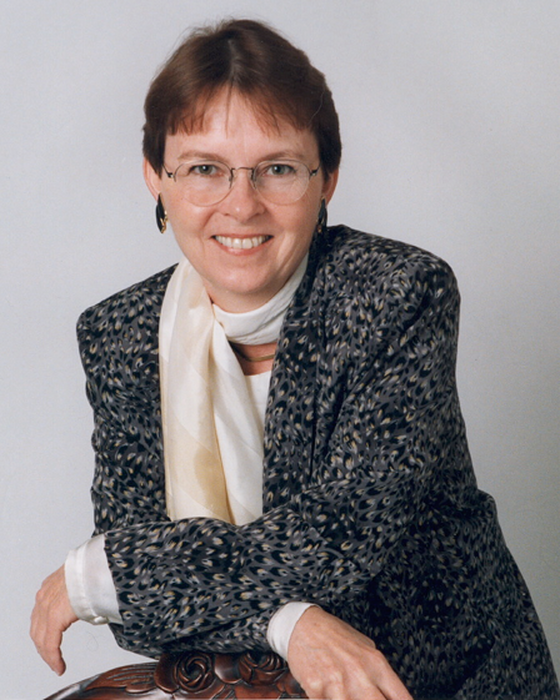
LINDA ROBBINS COLEMAN
Born January 1, 1954 in Des Moines, Iowa.
In Good King Charles’s Golden Days, A Symphonic Overture
- First performed in April 1995 by the Cedar Rapids Symphony Orchestra in Cedar Rapids, Iowa, conducted by Christian Tiemeyer.
- These concerts mark the first performances of this piece by the Des Moines Symphony.
(Duration: ca. 6 minutes)
Linda Robbins Coleman was born and raised in Des Moines, graduated from Drake University, and became the first Iowa woman to have music performed by a major symphony orchestra and to serve as Composer-in-Residence with any orchestra. Her residencies include Drake Theatre, Wartburg Community Symphony, and Orchestra Iowa. An accomplished pianist, she has performed as a jazz and classical soloist and collaborator.
Coleman has received more than 75 commissions for compositions ranging from solo and chamber music to symphonic music, from jazz to theatre and film. From 1977-97 she was resident composer for Drake Theatre and scored thirty-five plays ranging from the ancient Greeks and Shakespeare to modern playwrights. Her symphonic and chamber music has been performed and broadcast across North America, Europe, South America and Australia.
In 1981, Coleman and her husband founded the Friends of Drake Arts. In 1987, she co-founded the Iowa Composers Forum and was its chief administrator for ten years. She also spent fifteen years on the Iowa Arts Council performing artist and education rosters.
Coleman’s many awards and grants include those from Meet the Composer, American College Theatre Festival at the Kennedy Center, American Music Center, Houston International Film Festival, National Endowment for the Arts, and the Midwest All-Music Association Hall of Fame. She became a Member Laureate with Sigma Alpha Iota music fraternity in 1999, and in 2008 was awarded the Drake Alumni Achievement Award and membership into their Dignitas Society.
For four decades she was collaborator and research partner with Professor William S. E. Coleman. Their non-fiction book about the World War II era, Boyhood’s End, was published in 2023. Additionally, she served as a caregiver to elderly relatives for more than three decades.
The composer wrote, “In 1989, when I was commissioned by Drake Theatre to write overtures and incidental music to George Bernard Shaw’s 1939 masterpiece In Good King Charles’s Golden Days, I was confronted with the daunting task of capturing the play’s vivacious spirit in music. To evoke a sense of the late-17th century, I felt the use of a harpsichord was mandatory. Since the play also veered into 20th century ideas, including Einstein's theory of relativity, I wanted to include modern musical ideas as well.
“Subtitled ‘A True Story that Never Happened,’ the comedy features misunderstandings, clever insults, and above all, Shaw’s irrepressible wit. Themes representing the characters’ brilliant dialogue dash through sections of the orchestra in a merry romp. The play’s overture was two minutes long and composed for eight instruments. After the production completed its run, I decided to expand and transform this work into a full symphonic concert overture that would be about six minutes long.
“Since Orchestra Iowa premiered the work in April 1995, ‘Charley’ has been performed and broadcast throughout the world by orchestras ranging from the Milwaukee Symphony to various professional, amateur and youth orchestras. In 1999, ‘Charley’ went to England — birthplace of both King Charles and the play that inspired the music. That occasion was my British debut.
“Recent events have provided a timeliness to this symphonic overture. In September 2022, King Charles III acceded to the throne following the death of his mother, Queen Elizabeth II. While the subject of this overture is his seventeenth-century predecessor, King Charles II, also known as ‘The Merry Monarch,’ the two sovereigns are directly connected by name, history, and linage.”
The score calls for piccolo, two flutes, two oboes, two clarinets, bass clarinet, two bassoons, four horns, two trumpets, three trombones, tuba, timpani, harp, harpsichord, cymbals, snare drum, glockenspiel, xylophone, triangle and the usual strings.
PETER BOYER
Born February 10, 1970 in Providence, Rhode Island.
AMERICAN MOSAIC FOR NARRATOR & ORCHESTRA
- First performed on February 19, 2026 at the Kennedy Center for the Performing Arts in Washington, D.C. by the National Symphony Orchestra, conducted by Thomas Wilkins with John Milewski as narrator.
- These concerts mark the first full performances of this piece by the Des Moines Symphony.
(Duration: ca. 33 minutes)
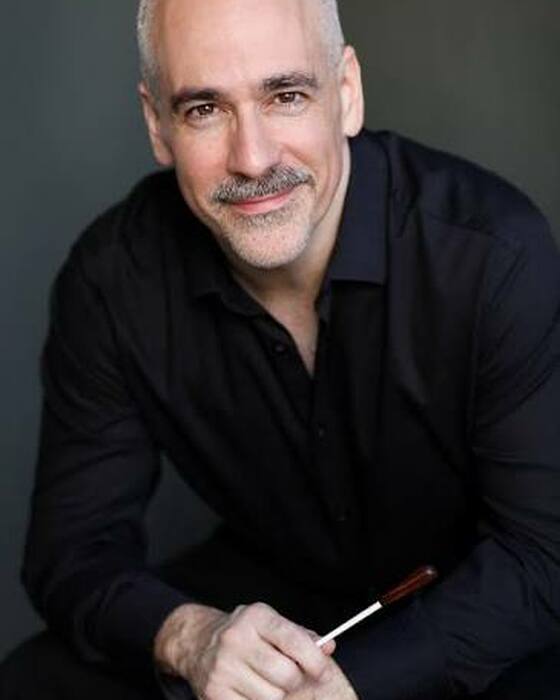
Peter Boyer is one of the most frequently performed American orchestral composers of his generation, with nearly a thousand performances by some 300 orchestras and broadcasts by radio stations around the United States and abroad. Boyer, born in Providence, Rhode Island in 1970, received his undergraduate education at Rhode Island College and his Master’s and Doctoral Degrees from the Hartt School of the University of Hartford. (At age 25, he became the youngest recipient of a Doctorate in the history of that institution.) He also studied privately with Pulitzer, Grammy and Oscar-winning composer John Corigliano in New York and completed the Film Scoring Program at the USC School of Music, working with Oscar-winning composer Elmer Bernstein. From 1999 to 2025, Boyer was on the faculty of Claremont Graduate University in California, where he held the Helen H. Smith Chair in Music; he has also taught at the Henry Mancini Institute at the University of Miami and the Conductors Institute at Bard College.
Among Boyer’s many distinctions are residencies with the Fort Worth Symphony Orchestra and Pasadena Symphony, Lancaster Symphony Composer’s Award, an honorary doctorate from Rhode Island College, and a Grammy nomination for Best Classical Contemporary Composition for the Naxos recording of Ellis Island, which has been performed over 300 times since its premiere in 2002; including by the Des Moines Symphony. In 2019, Boyer received the Ellis Island Medal of Honor, which is officially recognized by both Houses of Congress. His commissions include those from the Boston Pops, Cincinnati Pops, Carnegie Hall, “The President’s Own” United States Marine Band (a fanfare for the Inauguration of President Joseph A. Biden), and the ORA Singers of London for the choral work Today We Ask, celebrating the coronation of King Charles III in 2023. In addition to his concert works, Peter Boyer is also active in film and television as a composer and orchestrator, with credits including the History Channel, Jurassic World, Inside Out, Star Trek, The Hunger Games, Minions, Cars 2, The Amazing Spider-Man, Fantastic Beasts and Where to Find Them, Skyfall, the Oscar-winning Up, and two Academy Awards telecasts.
Joe Sohm’s Americana imagery has been published more than one million times in such major publications as National Geographic, The New York Times and The Wall Street Journal; on television stations including NBC, CBS, PBS, CNN and MSNBC; in Al Gore’s Oscar®-winning film An Inconvenient Truth; and 24 hours a day worldwide on the Internet. Sohm’s imagery, scripts and editing have been featured by the Boston Pops, Philly Pops, New West Symphony and Kansas City Symphony. His “Photo-Symphonies” have been narrated by Clint Eastwood and William Shatner, and his Presidential music video was featured during President Bill Clinton’s 1993 inauguration on worldwide television on MTV. Sohm’s work was featured in the “Concert for America” at the Kennedy Center on the first anniversary of 9/11. In 2013, Sohm co-published, with Reader’s Digest, his award-winning Visions of America tabletop book, featuring an introduction by Paul Theroux.
American Mosaic was jointly commissioned by the Des Moines Symphony, National Symphony Orchestra, Cincinnati Symphony, Williamsburg Symphony and Pacific Symphony, and premiered at the Kennedy Center for the Performing Arts in Washington, D.C. on February 19, 2026. For that performance, Sarina Benezra Bell, National Symphony Program Editor, provided the following information:
“American Mosaic, with Joe Sohm’s sweeping shots of every state in the nation, quotations from iconic figures in American history, and Boyer’s original score, finds its premise in a line from Benjamin Franklin about hoping to see the future of America, quoted in the work itself: ‘I have sometimes almost wish’d it had been my Destiny to be born two or three Centuries hence.’ In American Mosaic, Boyer and Sohm aim to satisfy Franklin’s curiosity, addressing the 250 years since the signing of the Declaration of Independence.
“Sohm, a Missouri native, first approached Boyer, a Rhode Islander, about the project in 2023, when they were both living in Southern California. Given their shared eye for American history and a common taste for the cinematic, an obvious sentiment emerged: Boyer’s music sounds like Sohm’s imagery, and Sohm’s imagery looks like Boyer’s music. Why not pair the two? With Boyer’s entire discography playing on repeat, Sohm took his RV to the open road, set on filling any geographical blanks in his videography with a view toward how they might be combined with Boyer’s music.
“Structurally, American Mosaic takes the form of a large symphonic suite with narration, split into eleven sections. Addressing such topics as natural wonders, urban development, infrastructure and the armed forces, among many others, the sections are delineated by one or more quotes from across American history. Quite purposefully, the work’s Prologue and final section, 250 and Counting, touch on a shared national responsibility. ‘The language of the Preamble sets up the challenges that we still must attempt to live up to,’ Boyer explained, ‘challenges that we obviously are still struggling with today.’ Towards the end of the piece, Franklin returns to remind the audience of that challenge — and privilege: ‘I must soon quit the Scene, but you may live to see our Country flourish.’
“Boyer said, ‘I have felt this in general over the years, but I feel it even more acutely now — in times of strife and division, music can be something that brings us together. American Mosaic celebrates a history that is worthy of celebration.”
The score calls for narrator, piccolo, three flutes, three oboes, English horn, three clarinets, bass clarinet, three bassoons, contrabassoon, four horns, three trumpets, three trombones, tuba, timpani, glockenspiel, crotales, chimes, xylophone, vibraphone, marimba, triangle, tambourine, suspended cymbal, sizzle cymbal, crash cymbals, tam-tam, snare drum, bass drum, harp, piano, celesta and the usual strings.
MICHAEL ABELS
Born October 8, 1962 in Phoenix, Arizona.
URBAN LEGENDS FOR STRING QUARTET & ORCHESTRA
- First performed in February 2012 in Detroit, Michigan by the Harlem Quartet and the Sphinx Symphony.
- These concerts mark the first performances of this piece by the Des Moines Symphony.
(Duration: ca. 11 minutes)
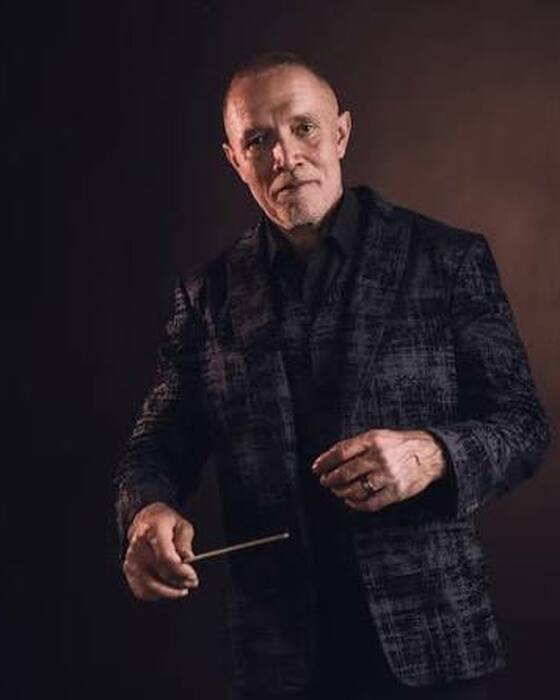
Michael Abels, born in Phoenix in 1962, was raised in rural South Dakota, where he began studying piano and composing at an early age. He attended the University of Southern California and was named Outstanding Senior among student composers in 1984. In 1985-1986, he studied West African music at the California Institute for the Arts. Abels established his reputation with gospel arrangements for Rev. James Cleveland and the Phoenix Symphony’s annual “Celebrating the Black Artist” program, as well as several orchestral works, notably Global Warming (1991), which was among the first works by an African-American composer performed in South Africa following the election of President Nelson Mandela. Abels’ creative career added a new dimension when he wrote the score for Jordan Peele’s Oscar-winning 2017 film Get Out. He has since scored Peele’s Us (for which Abels earned an Oscar nomination) and Nope (awarded Best Score for a Studio Film by the Society of Composers & Lyricists), as well as Bad Education, Nightbooks, Fake Famous, the docu-series Allen v. Farrow, and a dozen other major films. In 2023, the opera Omar, co-written by Abels and Grammy Award-winner Rhiannon Giddens, received the Pulitzer Prize for Music. The New York Times named Omar, based on the only known memoir written in Arabic by a slave in America, one of the “10 Best Classical Performances of 2022” and wrote, “What Giddens and Abels created is an ideal of American sound, an inheritor of the Gershwins’ Porgy and Bess, but more honest to its subject matter, conjuring folk music, spirituals, Islamic prayer and more, woven together with a compelling true story that transcends a documentary.”
Urban Legends was commissioned in 2012 by the Sphinx Organization, a leading advocacy group for classical musicians of color, and premiered by the Harlem Quartet and the Sphinx Symphony at the annual Sphinx Competition in Detroit in February 2012. Each of the work’s three movements — The Underdog, Ghetto Strings and Delicate Fear — blends classical techniques with rhythmic energy drawn from rock, jazz, hip-hop, EDM (Electronic Dance Music) and cinematic traditions in a contemporary concert setting. Urban Legends is the piece that inspired Jordan Peele to ask Abels to score his Oscar-winning Get Out.
The score calls for flute, two oboes, two clarinets, two bassoons, four horns, three trumpets, three trombones, tuba, timpani, cymbals, glockenspiel, triangle, tom-toms, congas, timbales, West African drums, shaker, lion’s roar, drum set, harp and the usual strings.
LEONARD BERNSTEIN
Born August 25, 1918 in Lawrence, Massachusetts;
died October 14, 1990 in New York City.
SYMPHONIC DANCES FROM WEST SIDE STORY
(1957, Arr. 1961)
- West Side Story was first performed on Broadway on September 26, 1957; Symphonic Dances was first performed on February 13, 1961 in New York, conducted by Lukas Foss.
- First performed by the Des Moines Symphony on December 31, 1985 with Yuri Krasnapolsky conducting. Three subsequent performances occurred, most recently on May 18 & 19, 2019 with Joseph Giunta conducting.
(Duration: ca. 21 minutes)
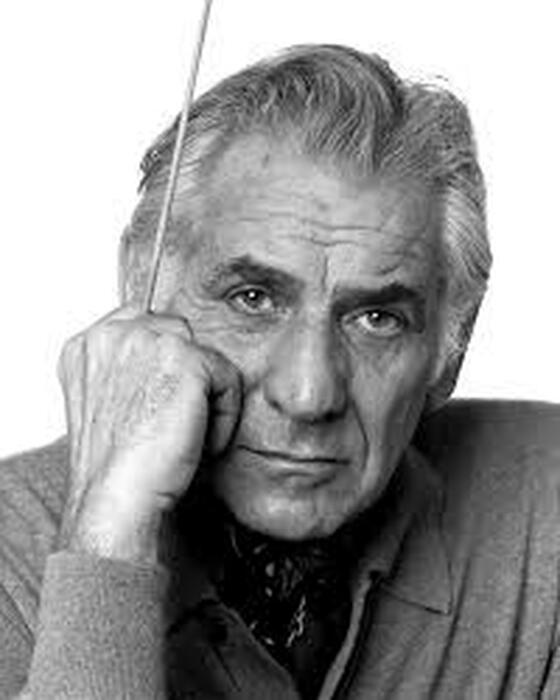
West Side Story was one of the first musicals to explore a serious subject with wide social implications. More than just the story of the tragic lives of ordinary people in a grubby section of New York, it was concerned with urban violence, juvenile delinquency, clan hatred and young love. The show was criticized as harshly realistic by some who advocated an entirely escapist function for a musical, depicting things that were not appropriately shown on the Broadway stage. Most, however, recognized that it expanded the scope of the musical theater through references both to classical literature (Romeo & Juliet) and to the pressing problems of modern society. Brooks Atkinson, former theater critic for The New York Times, noted in his book Broadway that West Side Story was “a harsh ballad of the city, taut, nervous and flaring, the melodies choked apprehensively, the rhythms wild, swift and deadly.”
Much of the show’s electric atmosphere was generated by its brilliant dance sequences, for which Jerome Robbins won the 1957-1958 Tony Award for choreography. In 1961, Bernstein chose a sequence of dance music from West Side Story to assemble as a concert work, and Sid Ramin and Irwin Kostal executed the orchestration of these “Symphonic Dances” under the composer’s direction. Bernstein said that he called these excerpts “symphonic” not because they were arranged for full orchestra but because many of them grew, like a classical symphony, from a few basic themes transformed into a variety of moods to fit the play’s action and emotions. West Side Story, like a very few other musicals — Show Boat, Oklahoma!, Pal Joey, A Chorus Line, Sunday in the Park with George, Rent, Hamilton — provides more than just an evening’s pleasant diversion. It is a work that gave an entirely new vision and direction to the American musical theater.
The score calls for piccolo, two flutes, two oboes, English horn, E-flat clarinet, two clarinets, two bassoons, contrabassoon, four horns, three trumpets, three trombones, tuba, timpani, bass drum, cymbals, snare drum, glockenspiel, xylophone, vibraphone, chimes, tambourine, triangle, woodblock, cowbells, tam-tam, finger cymbals, maracas, police whistle, guiro, tom-toms, congas, bongos, timbales, drum set, piano, harp, celesta and the usual strings.